
Pulsar Oryx LRF XG35 Thermal Monocular for hunting, terrain surveillance, wildlife observation
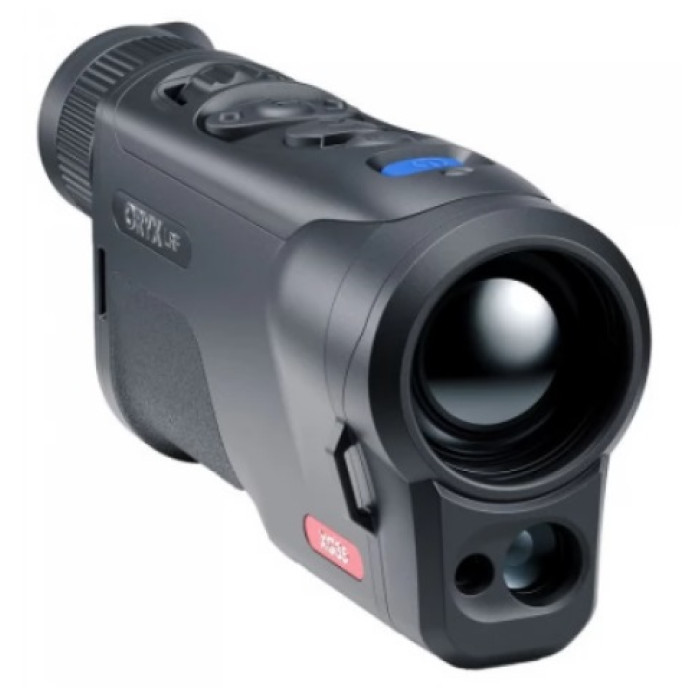
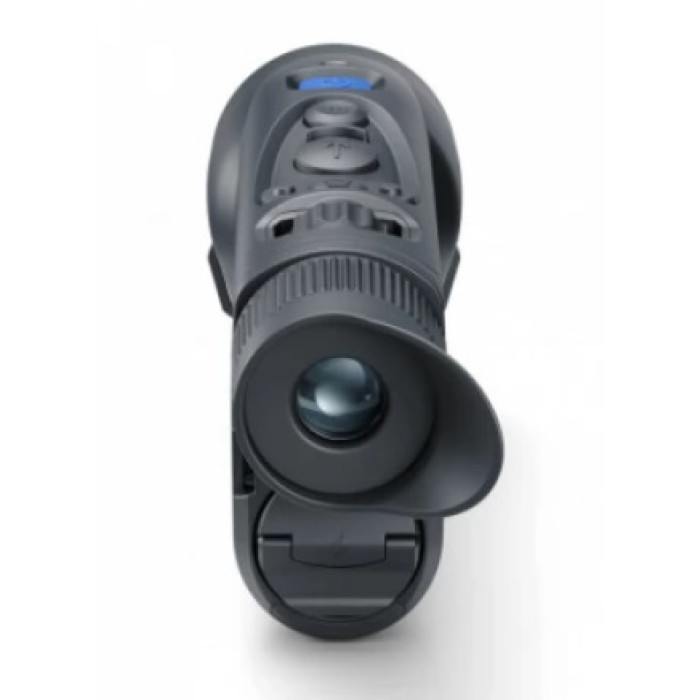
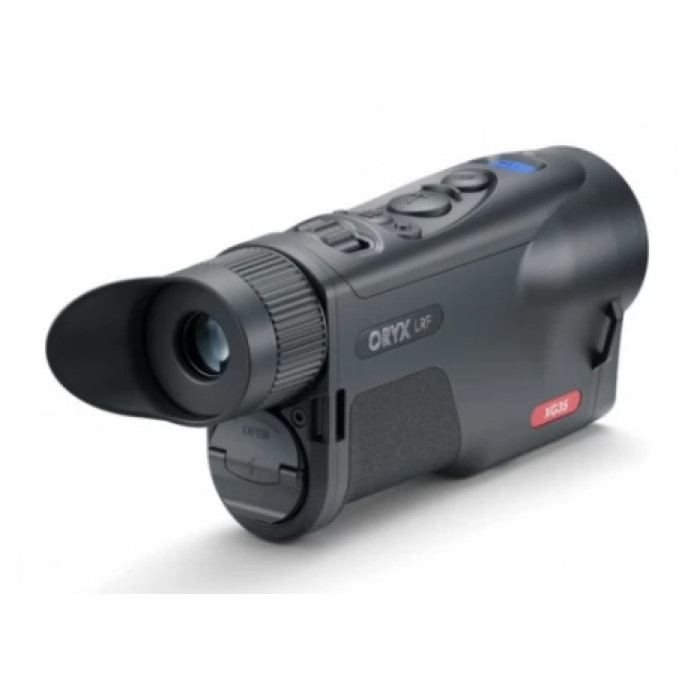
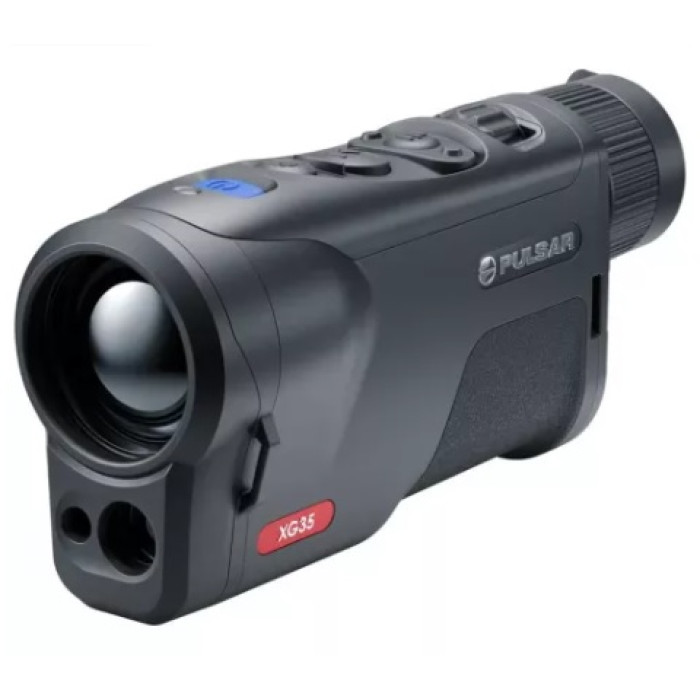
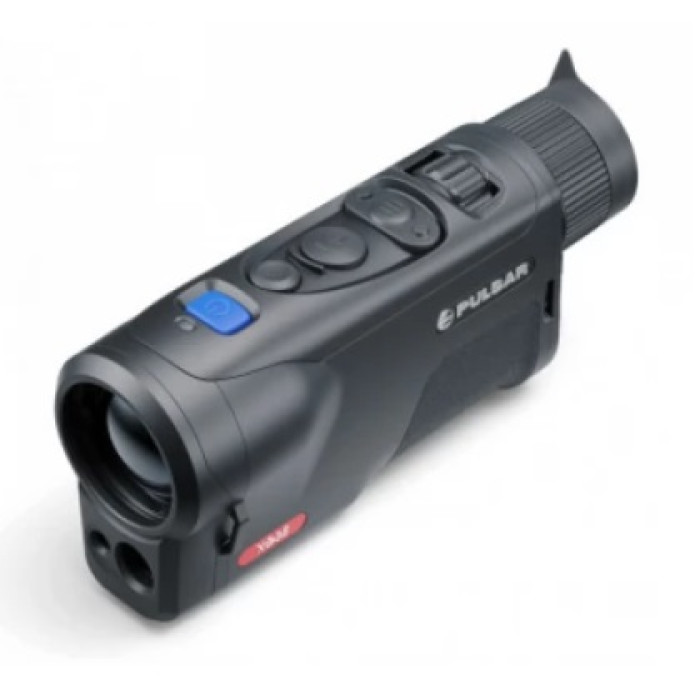


Pulsar Oryx LRF XG35 Thermal Monocular
Pulsar Oryx LRF XG35 represents a new generation of thermal observation and is designed for users who value reliable detection, precise distance measurement, long battery life, and easy one-handed operation. Its new ergonomic design places the focus wheel behind the eyepiece, allowing faster and more natural handling without unnecessary changes in hand position. Combined with a powerful thermal sensor, an integrated laser rangefinder, and a rich set of functions, the Oryx LRF XG35 is a practical tool for hunting, terrain surveillance, wildlife observation, and professional outdoor use.
For users looking for a compact yet serious thermal device, the Oryx LRF XG35 offers a strong balance of image quality, autonomy, and durability. The thermal monocular performs especially well in low-visibility conditions such as fog, rain, snow, dusk, dense brush, or open terrain where quick target detection and distance estimation are essential.
Technical specifications
- Device type: thermal monocular with integrated laser rangefinder.
- Thermal sensor: 640×480, 12 µm.
- sNETD: <20 mK.
- NETD: <40 mK.
- Frame refresh rate: 50 Hz.
- Objective lens: 35 mm f/1.0.
- Magnification: 2.5–20x.
- Digital zoom: 1x, 2x, 4x, 8x.
- Field of view: 12.5° × 9.4°.
- Field of view at 100 m: 21.9 × 16.4 m.
- Eye relief: 14 mm.
- Detection range: up to 1800 m.
- Display: AMOLED HD.
- Display resolution: 1024×768.
- Built-in laser rangefinder: yes.
- Rangefinder measuring distance: up to 1500 m.
- Rangefinder accuracy: ±1 m.
- Laser safety class: Class 1 (according to IEC 60825-1:2014).
- Laser wavelength: 905 nm.
- Video recording: yes, with sound and photo capture.
- Video/photo resolution: 1024×768.
- Video/photo format: .mp4 / .jpg.
- Internal memory: 64 GB.
- Wireless protocol: Wi‑Fi.
- Wireless standard: IEEE 802.11 b/g/n/ac (WPA).
- Frequency band: 2.4 / 5 GHz.
- Protection rating: IP67 (according to IEC 60529).
- Operating temperature: -25 to +40 °C.
- Supported app: Stream Vision 2.
- Output voltage: 3.0–4.2 V.
- Battery type: APS 5 Li-ion battery pack.
- Battery capacity: 4900 mAh.
- Battery life: up to 12 hours, depending on temperature; tested at 22 °C.
- Body material: magnesium alloy.
- Dimensions: 179 × 52 × 77 mm.
- Weight: about 500 g.
What makes the Oryx LRF XG35 stand out
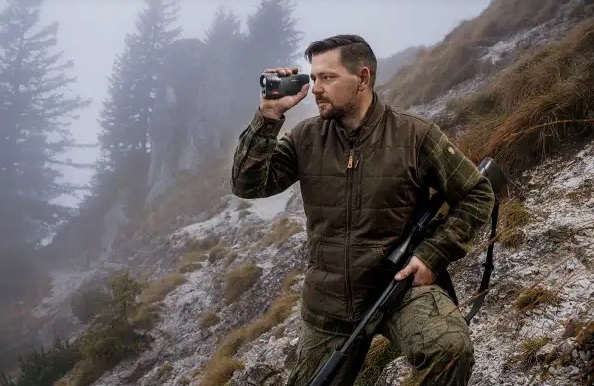
The biggest advantage of this model is its practical design for real field use. The Oryx LRF XG35 is built for one-handed operation, which means it can be raised, aimed, and used quickly without unnecessary movement. This is especially important for hunting, tracking, scanning forest edges, or situations where the other hand is occupied with gear, a rifle, or support equipment.
The 640×480 thermal sensor with 12 µm pixel pitch and system sensitivity below 20 mK provides strong image clarity even when temperature differences are small. This helps users identify animals, people, or heat signatures against visually complex backgrounds such as grass, branches, shoreline areas, or uneven terrain. The 50 Hz refresh rate ensures smooth motion rendering and reduces blur when tracking dynamic scenes.
The 35 mm f/1.0 lens offers a good compromise between field of view and image detail. It allows the user to scan space quickly while still keeping enough clarity for identification at longer distances. Maximum magnification up to 20x adds more detail for closer inspection, especially when combined with electronic image stabilization, which reduces the effects of small hand movements.
Laser rangefinder and field advantage
The integrated laser rangefinder is one of the most useful elements of this monocular. It operates at a wavelength of 905 nm and measures distances up to 1500 m with ±1 m accuracy. That is extremely useful in hunting and surveillance, where estimating distance often determines the next action, reaction speed, and planning accuracy.
The rangefinder provides fast and reliable measurements in open terrain, along field edges, in forest clearings, across valleys, or over water. Because it is integrated into the device, the user does not need a separate rangefinder and does not have to break observation to estimate distance.
Display, recording, and connectivity
 The AMOLED HD display with 1024×768 resolution delivers high contrast and good readability in the field. Such a display helps during long observation sessions because the image remains clear and stable, making it easier to distinguish shapes and heat sources.
The device supports video and photo recording in 1024×768 resolution, with .mp4 and .jpg formats, and it also records sound. This is useful for documenting observations, analysing animal behaviour, or keeping field records. The built-in 64 GB memory provides enough storage for regular recording without needing external memory right away.
Wi‑Fi connectivity on 2.4 GHz and 5 GHz allows integration with a smartphone through the Stream Vision 2 app. Users can manage recordings, view content, change settings, and transfer files more conveniently. This greatly increases the practical value of the device in everyday work.
Power and autonomy
The Oryx LRF XG35 uses an APS 5 Li-ion battery pack with a capacity of 4900 mAh, and battery life can reach up to 12 hours depending on conditions and temperature. Testing at 22 °C shows excellent endurance for a full day in the field. That is a major benefit for users who do not want to constantly think about charging and battery changes.
A very practical feature is that the external battery pack can be replaced quickly and the device can continue operating without interruption. Output voltage of 3.0–4.2 V and support for external USB-C power further increase flexibility during longer outings, scouting, or professional use.
Housing and durability
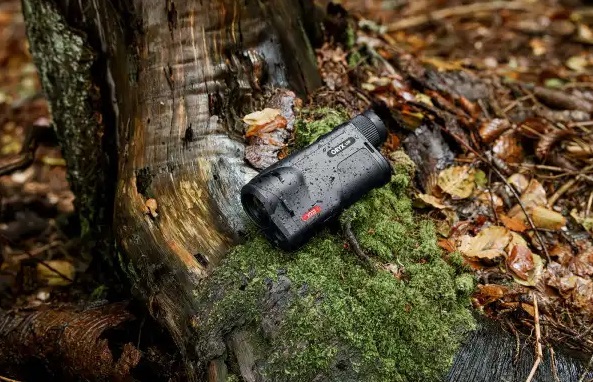
 The housing is made from magnesium alloy, giving the device a strong balance of weight, rigidity, and durability. At around 500 g, it is light enough for long one-handed use, but still robust enough for serious field conditions.
The IP67 protection rating means the device is resistant to dust and water, so it can be used in rain, snow, and humid environments without worrying about fast damage. The operating temperature range from -25 to +40 °C confirms that it is ready for use through most of the year, from cold winter mornings to warm summer evenings.
Ergonomics and ease of use
The Oryx LRF XG35 has a symmetrical body that works equally well for left-handed and right-handed users. The strap and hand loop can be mounted on either side, which increases flexibility in practical use. The focus wheel is positioned behind the eyepiece, making operation intuitive and fast.
For users who spend a lot of time observing, the 1/4" tripod mount is also important. It allows more stable viewing during long sessions, especially when you need to monitor a specific area or object without tiring your hand.
Why choose the Oryx LRF XG35
Pulsar Oryx LRF XG35 stands out because it offers a very strong balance of compact size, thermal image quality, long battery life, and practical one-handed operation. It is not just a basic detection device, but a serious tool for users who need accurate data, reliable performance, and long-lasting readiness in the field.
When should you consider another Pulsar model?
Oryx LRF XG35 may not be the ideal choice if your main priority is maximum detection range or extreme long-range observation beyond 2,000 m. In this case, a model with a larger 50 mm objective lens and higher-resolution sensor (such as the Oryx LRF XG50 or Merger LRF XT50 binocular) may be more suitable.
If you need a weapon-mounted thermal solution for precision shooting rather than handheld observation, consider Pulsar's Thermion 2 LRF series thermal riflescopes, which offer integrated laser rangefinders, ballistic calculators, and reticle options optimized for ethical long-range shots on game or tactical targets.