
Thermal imaging




Thermal Imaging – Your Unseen Advantage in European Hunting
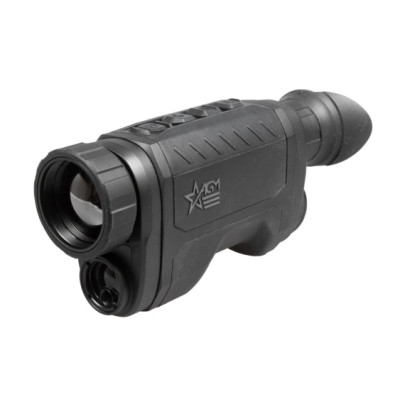
Step into a new dimension of detection with our comprehensive range of thermal imaging devices. This cutting-edge technology converts invisible heat signatures into clear, detailed visuals, allowing you to see what others can't—whether it's game hidden in dense cover, elusive predators after dark, or intruders in low visibility conditions. Our selection features a wide array of thermal imaging devices, particularly versatile thermal monocular units perfect for handheld scouting and wildlife observation. Ideal for hunters, wildlife observers, and security professionals across Croatia, Germany, and Austria, these devices excel where conventional optics fail, providing unparalleled detection day or night.
As a specialist retailer, Professional Optics offers an extensive array of thermal vision for hunting from the world's most reputable brands, including AGM, Pulsar, Hikmicro, FLIR, Trijicon, Steiner, Vortex Croatia, Swarovski optics, Zeiss, and Burris. We provide fast, reliable EU shipping to Germany, Austria, Croatia, Slovakia, Czech Republic, Hungary, and Italy, ensuring you get your gear promptly. Our multilingual support team will help you find the perfect opticsup to 1000 euro, and ensure you buy thermal imaging at the best price.
- Superior Detection: Spot targets from hundreds to thousands of meters away, even in total darkness, with a handheld thermal monocular.
- All-Weather Performance: Unaffected by ambient light, thermal optics perform flawlessly in fog, rain, or snow.
- High Sensitivity (Low NETD): Modern sensors with NETD ratings <25 mK detect minute temperature differences for clear target identification.
- Fast Refresh Rates: Smooth, lag-free viewing of moving targets with refresh rates from 50 Hz to 90 Hz.
- Smart Functionality: Many models include Wi-Fi for streaming and recording, multiple color palettes, and Picture-in-Picture modes for enhanced observation.
Discover the difference a handheld thermal monocular can make in your next hunt. Browse our top-rated models and gain the unseen advantage.
Choose the Right Thermal Imaging Device for Your Needs
Choosing the right thermal imaging device depends on how far you need to detect heat signatures, how much detail you require, and how you plan to use the equipment. From compact handheld thermal monoculars to advanced thermal imaging scopes, different device types offer distinct advantages.
Thermal Monoculars for Handheld Observation
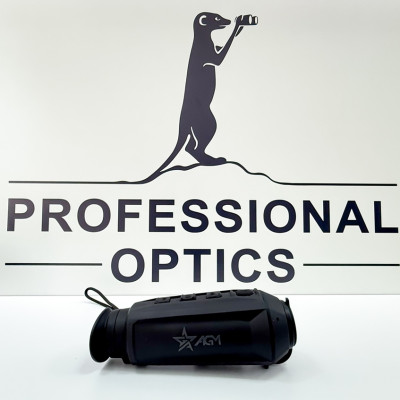
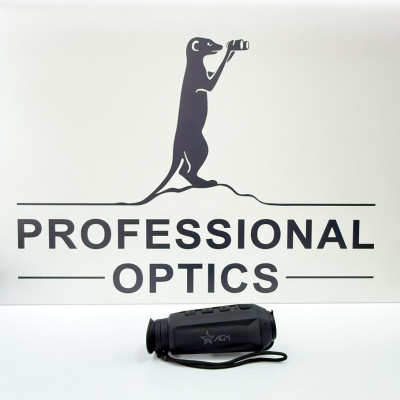
A thermal monocular is a compact, portable solution for scanning terrain, observing wildlife, and detecting heat signatures without carrying larger equipment. It is particularly useful for users who value mobility, a wide field of view, and quick access to thermal imaging technology.
When comparing thermal monoculars, consider sensor resolution, lens diameter, thermal sensitivity (NETD), battery life, and detection range. Models with integrated laser rangefinders can also help measure distances to observed objects.
Explore our selection of thermal monoculars to compare available models and find a device suited to your requirements.
Thermal Imaging Scopes for Hunting
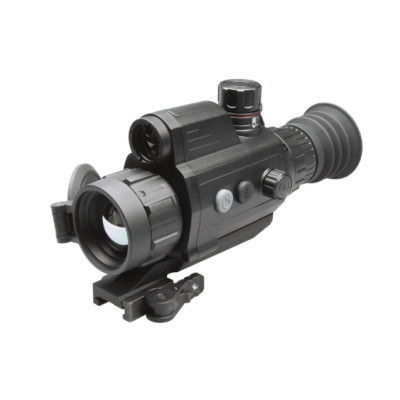
A thermal imaging scope combines a thermal sensor, an optical system, and a display in a dedicated viewing device. Depending on the model and its intended application, it can provide image magnification, digital zoom, image recording, and other features designed for field use.
When comparing thermal scopes, pay attention to the sensor resolution, lens specifications, native magnification, field of view, and image quality at your intended observation distance. Higher magnification alone does not guarantee better detail, particularly when the thermal sensor has limited resolution.
For an example of this category, explore the AGM Rattler V2 25-384 thermal imaging scope.
Thermal Clip-On Devices
Thermal clip-on devices are designed to work with compatible daytime optical systems. Instead of replacing an existing optic, a clip-on attaches in front of it, allowing users to incorporate thermal imaging into a suitable setup.
Compatibility is essential when selecting this type of equipment. Check the manufacturer’s mounting requirements, supported optical magnification, alignment specifications, and intended operating configuration before purchasing.
Discover the AGM Rattler-C V2 19-256 thermal imaging clip-on as an example of a compact thermal imaging solution.
How to Choose a Thermal Imaging Device
Understanding a few key specifications makes it easier to compare thermal imaging devices and identify the right balance between performance, portability, and price.
* Sensor resolution: Higher resolution generally provides more image detail, particularly when observing objects at greater distances. Compare the complete optical system rather than resolution alone.
* Thermal sensitivity (NETD): A lower NETD value indicates that a sensor can detect smaller temperature differences under specified test conditions. This can be especially relevant in low-contrast thermal environments.
* Lens diameter and focal length: These affect the field of view, image scale, and practical observation distance. Longer focal lengths typically provide a narrower field of view.
* Detection range and identification detail: A manufacturer’s stated detection range does not necessarily mean that an object can be clearly identified at that distance. Distinguish between detecting a heat signature, recognising an object, and identifying its details.
* Refresh rate: A higher refresh rate can provide smoother viewing when observing movement.
* Battery life and durability: For extended outdoor use, consider operating time, weather protection, weight, and the availability of replaceable or external power sources.
* Additional features: Wi-Fi, image and video recording, multiple colour palettes, digital zoom, and integrated rangefinders can improve usability, depending on the intended application.
The best thermal imaging device is not necessarily the model with the highest specifications. It is the one whose sensor, lens, features, and price match your actual requirements.
Thermal Imaging Technology from Leading Brands
Professional Optics brings together thermal imaging products from established manufacturers, including AGM, Pulsar, and HIKMICRO. Their product ranges cover different sensor configurations, lens options, form factors, and price levels.
AGM offers thermal monoculars, dedicated thermal scopes, and clip-on systems. Pulsar provides thermal observation devices designed for users who value image quality, ergonomics, and practical field functionality. HIKMICRO offers thermal imaging solutions across a range of applications and budgets.
Compare available models by technical specifications and intended use to find the right combination of performance and value.
Buy Thermal Imaging Devices Online at Professional Optics
At Professional Optics, we help customers compare thermal imaging equipment according to their needs, technical requirements, and budget. Whether you are looking for a compact thermal monocular for wildlife observation or a more advanced thermal imaging system, our selection offers options across different performance levels.
We serve customers across Europe, with EU shipping options for Croatia, Germany, Austria, Slovakia, the Czech Republic, Hungary, Italy, and other supported destinations. Our multilingual team can help you understand technical specifications and compare suitable models before making a purchase.
Browse our thermal imaging collection to explore available products, compare prices, and find the right thermal imaging solution.
Frequently Asked Questions About Thermal Imaging
What is the difference between a thermal monocular and a thermal imaging scope?
A thermal monocular is generally designed for handheld observation and scanning. A thermal imaging scope is a dedicated viewing system designed for its specified mounting and application. The appropriate choice depends on how the device will be used.
Can thermal imaging work in complete darkness?
Yes. Thermal imaging detects infrared radiation emitted by objects rather than relying on visible light. It can therefore produce thermal images in complete darkness, although image quality and detection performance depend on the sensor, lens, weather, and temperature conditions.
Does a higher thermal sensor resolution always mean better performance?
Not necessarily. Higher resolution can reveal more detail, but lens quality, thermal sensitivity, image processing, field of view, and environmental conditions also affect the result. The complete system should be evaluated rather than one specification in isolation.
What does NETD mean in thermal imaging?
NETD stands for Noise Equivalent Temperature Difference. It describes a thermal sensor’s ability to distinguish small temperature differences under specified test conditions. Lower NETD values generally indicate greater thermal sensitivity, although measurement conditions and other device specifications matter.
What is the difference between detection range and identification range?
Detection range describes the distance at which a device can detect the presence of an object. Recognition and identification require progressively more image detail. A quoted maximum detection range should not be interpreted as a guarantee of clear identification at that distance.
How much should I spend on a thermal imaging device?
The right budget depends on the intended application, sensor resolution, lens, thermal sensitivity, and additional features. Entry-level models may be suitable for basic observation, while more demanding applications can benefit from higher-resolution sensors, specialised optics, and integrated rangefinders. Compare the available specifications and choose according to your actual requirements.