
Pulsar Telos LRF XT50 Thermal Imaging Monocular with Rangefinder
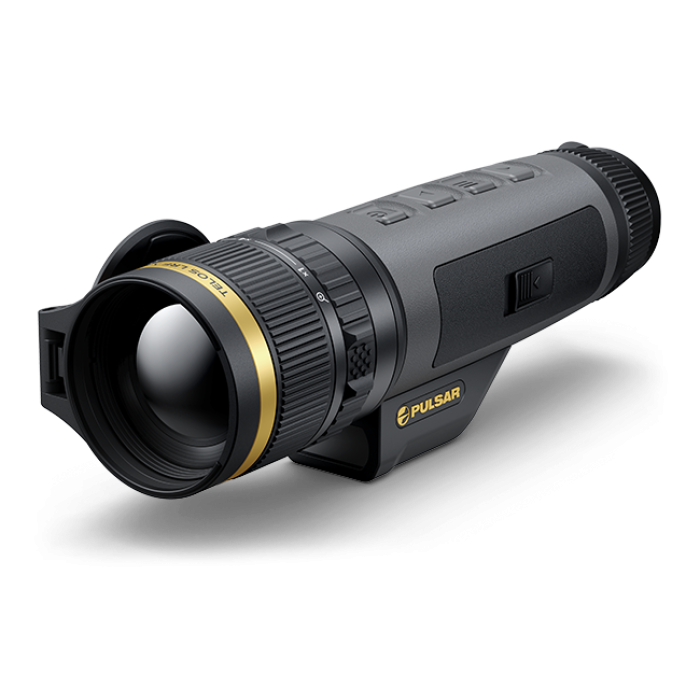
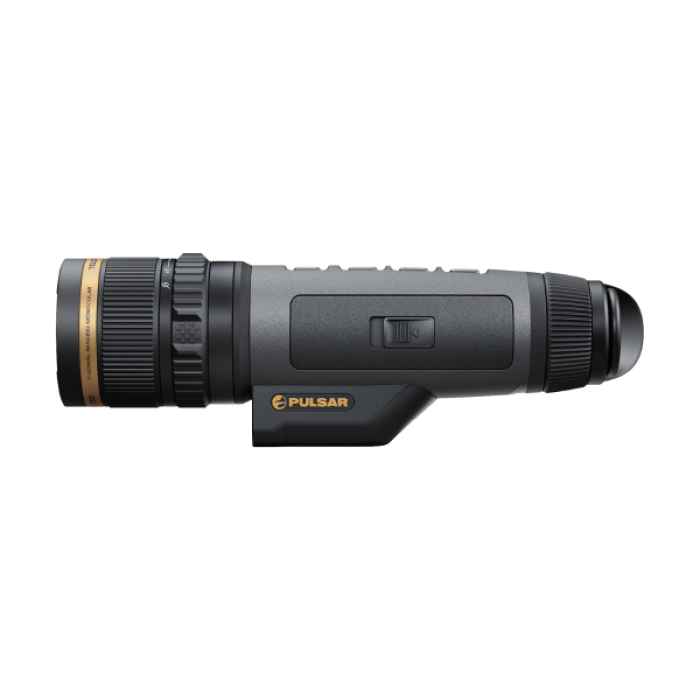
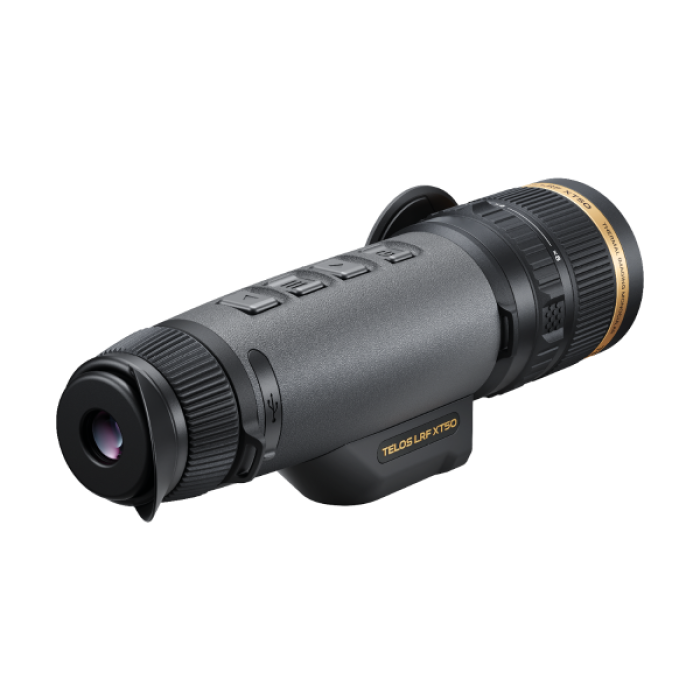


Pulsar Telos LRF XT50 – Thermal Imaging Monocular with Rangefinder
Pulsar Telos LRF XT50 is a flagship upgradeable thermal imaging monocular featuring a European-made 1280×1024 HD sensor, a wide 17.5° field of view, an F50/1.0 objective lens and an integrated laser rangefinder with a measuring range of up to 1,200 metres. It is designed for hunting, locating game, area surveillance and extended observation across open or mixed terrain, where long detection range, high detail and rapid scanning are equally important.
What sets the Telos LRF XT50 apart from most conventional thermal imaging devices is its upgradeable hardware concept. The Telos Upgradeability service is designed to allow the sensor and objective lens to be replaced when compatible next-generation components become available. Non-LRF Telos models may also be eligible for a laser rangefinder upgrade. The availability, price and exact conditions of each upgrade should be confirmed with an authorised Pulsar dealer.
1280×1024 HD sensor
The uncooled microbolometer has a resolution of 1280×1024 pixels and a 12 µm pixel pitch, producing a highly detailed thermal image and retaining more useful information when digital magnification is applied. System NETD below 20 mK helps reveal subtle temperature differences, while the 50 Hz refresh rate provides smooth viewing of moving animals.
High sensor resolution is especially useful in complex scenes, such as an animal standing close to vegetation, game against uneven terrain or several heat signatures at a long distance. The device cannot see through solid obstacles, but it can detect exposed heat signatures in complete darkness, haze and other low-visibility conditions.
Wide field of view
The fast F50/1.0 thermal objective provides 2× base magnification and a field of view measuring 17.5×14°, equivalent to 30.7×24.7 m at 100 m. This combination makes it possible to scan woodland edges, fields and mixed terrain quickly without losing a large part of the surrounding area from view.
The low base magnification simplifies initial target detection and helps keep moving animals inside the frame. Once a target has been found, magnification can be increased smoothly up to 16×. The Zoom Boost function extends the maximum magnification to 24× for closer inspection of a selected area.
1,200 m laser rangefinder
The integrated laser rangefinder measures distances up to 1,200 m with a stated accuracy of ±1 m. Its 905 nm laser is classified as Class 1 under IEC 60825-1:2014 and supports both single measurements and continuous scanning.
Integrating the rangefinder into the monocular removes the need to carry and operate a separate device. Accurate distance information supports assessment of the surroundings, route planning and ballistic calculations through the compatible Stream Vision Ballistics application.
Focus and zoom control
The focusing and smooth zoom rings are positioned one behind the other on the objective lens, following the familiar arrangement used on professional camera lenses. The user can focus the image and adjust magnification with one hand without switching between multiple buttons or covering the image with an on-screen menu.
The vertically symmetrical control layout is suitable for both right- and left-handed operation. Haptic feedback confirms commands without requiring the user to check the display interface continually.
Full HD AMOLED display
The Telos LRF XT50 uses a 1920×1080 AMOLED HD display. Its Full HD resolution presents the output of the high-resolution thermal sensor clearly and provides sharp rendering of menus, rangefinder readings and other on-screen data.
The eyepiece offers dioptre adjustment from −5 to +4 D, allowing the display to be adapted to the user’s eyesight. Eye relief is 13 mm.
Nine colour palettes
The user can select from nine thermal colour palettes to suit the observation conditions and specific task. Monochrome modes are practical for extended viewing and detailed inspection, while high-contrast colour palettes can make the hottest areas and thermal objects easier to locate quickly.
Selecting a palette does not change the sensor’s detection range; it only changes how the measured temperature differences are displayed. Less intense monochrome palettes are generally more comfortable during prolonged observation, while high-contrast modes are useful for rapid scanning.
Photo, video and memory
The integrated recorder captures photographs in JPG format and video in MP4 format at a resolution of 1440×1080 pixels. The substantial 128 GB internal memory allows field observations to be documented without an external recorder or constant file transfer to a smartphone.
Recordings can be used to analyse animal behaviour, document detected objects or prepare field reports. The actual number of files that can be stored depends on video duration and the selected recording settings.
Wi-Fi and Bluetooth
The Telos LRF XT50 supports dual-band 2.4/5 GHz Wi-Fi using the IEEE 802.11 b/g/n/ac standard, as well as Bluetooth BLE 5.0. NFC Quick Pairing simplifies the initial connection to a compatible smartphone: touching the phone to the device initiates pairing with Stream Vision 2 without manually searching for a network or entering Wi-Fi credentials.
The Stream Vision 2 application supports live image streaming, file transfer, remote control of compatible functions and firmware updates. Support for Stream Vision Ballistics allows rangefinder data to be incorporated into a compatible ballistic workflow.
LPS 7i battery
The replaceable LPS 7i lithium-ion battery has a capacity of 6,400 mAh and provides up to 8 hours of operation at an ambient temperature of 22 °C. Actual runtime depends on external temperature, Wi-Fi and rangefinder use, video recording and display brightness.
The battery can be charged directly through its USB Type-C port using the Power Delivery fast-charging protocol. The LPS 7i also supports wireless charging, so a dedicated battery charger is not the only charging option. The device can additionally operate from an external 5 V or 9 V power source through USB Type-C.
Field-ready housing
The rubber-coated exterior provides a secure grip with dry or wet hands and helps the user retain control of the monocular in rain. IPX7 waterproof protection safeguards the device against heavy precipitation and allows temporary immersion within the limits of the specified protection class. The operating temperature range is −25 to +40 °C.
The housing is made of plastic with a durable rubber coating. The device measures 242×72×77 mm and weighs 0.73 kg. A compatible 1/4″ adapter can be used to mount the monocular on a tripod.
Technical specifications
Specification | Value |
Device type | Thermal imaging monocular with laser rangefinder |
Model | Pulsar Telos LRF XT50 |
Sensor type | Uncooled microbolometer |
Sensor resolution | 1280×1024 pixels |
Pixel pitch | 12 µm |
Sensor NETD | <40 mK |
System NETD | <20 mK |
Frame rate | 50 Hz |
Objective lens | F50/1.0 |
Magnification | 2–16× |
Zoom Boost | Up to 24× |
Field of view | 17.5×14° |
Field of view at 100 m | 30.7×24.7 m |
Dioptre adjustment | −5 to +4 D |
Eye relief | 13 mm |
Detection range | 2,300 m |
Display type | AMOLED HD |
Display resolution | 1920×1080 pixels |
Rangefinder range | Up to 1,200 m |
Measuring accuracy | ±1 m |
Laser wavelength | 905 nm |
Laser safety class | Class 1 under IEC 60825-1:2014 |
Photo and video resolution | 1440×1080 pixels |
File formats | JPG / MP4 |
Internal memory | 128 GB |
Bluetooth | BLE 5.0 |
Wi-Fi | IEEE 802.11 b/g/n/ac, WPA |
Wi-Fi bands | 2.4/5 GHz |
Supported applications | Stream Vision 2, Stream Vision Ballistics |
Protection rating | IPX7 |
Operating temperature | −25 to +40 °C |
Tripod connection | 1/4″ adapter |
Battery | Replaceable LPS 7i Li-Ion battery pack |
Battery capacity | 6,400 mAh |
Operating time | Up to 8 hours at 22 °C |
External power supply | 5/9 V, USB Type-C Power Delivery |
Housing material | Plastic with rubber coating |
Dimensions | 242×72×77 mm |
Weight | 0.73 kg |
SKU | 77524 |
Practical field use
Scanning open terrain. The 17.5° field of view covers a large area and helps the user locate individual heat signatures more quickly.
Observation across mixed terrain. High sensor resolution makes it easier to distinguish an animal from vegetation, grass and an uneven background, while 2× base magnification preserves good situational awareness.
Long-range inspection. Zoom Boost provides magnification up to 24× for examining a previously detected target in greater detail. Image detail naturally decreases at maximum digital magnification, so scanning should begin at the lowest setting.
Operation in complete darkness. The thermal sensor does not require visible light or an infrared illuminator, making the Telos suitable for discreet nighttime observation.
Distance measurement. The integrated 1,200 m rangefinder measures distance without forcing the user to switch devices or remove the target from view.
Initial setup
- Fully charge the LPS 7i battery through USB Type-C Power Delivery or a compatible wireless charger.
- Install the battery and switch on the monocular.
- Adjust the dioptre ring until the interface symbols appear completely sharp.
- Aim the device at an object and focus the image using the objective ring.
- Begin scanning at 2× and increase the magnification only after locating the target.
- Select the thermal colour palette and signal amplification level appropriate for the conditions.
- Check the rangefinder in both single-measurement and continuous scanning modes.
- Connect the device to Stream Vision 2 if file transfer, firmware updates or remote operation are required.
The Telos LRF XT50 is a handheld observation device rather than a weapon sight, so zeroing is not required. When using a tripod, simply secure a compatible 1/4″ adapter and check that the connection is stable.
Maintenance and storage
- Remove loose dust from the objective with an optical air blower or a soft lens brush.
- Use only cleaning cloths and fluids intended for coated optical surfaces.
- Do not use household glass cleaners, abrasive materials or aggressive solvents.
- After use in rain or snow, wipe the housing and allow the device to dry at room temperature.
- Keep the battery contacts and USB Type-C port clean and dry.
- Before long-term storage, charge the battery according to the manufacturer’s recommendations.
- Do not disassemble the housing, as unauthorised intervention may compromise waterproofing and warranty coverage.
Why choose Telos LRF XT50?
The Pulsar Telos LRF XT50 combines three important field capabilities: a 1280×1024 HD sensor, a wide field of view and a 1,200 m laser rangefinder. In practical use, this enables the user to locate an object quickly, maintain awareness of the surrounding terrain, measure the distance and record the observation with one device.
The modular Telos concept provides additional long-term value. Official hardware upgrade options are intended for users who plan to operate their thermal imaging monocular for several seasons and do not want to replace the entire device when compatible components with improved specifications become available.
Package contents
The exact package contents may vary according to the market and delivery batch. Before ordering, check the current package contents on the Professional Optics product page. A typical operating set may include the monocular, LPS 7i battery, charging accessories, carrying straps, protective case, power adapter and manufacturer documentation.
Frequently asked questions
Is the Telos LRF XT50 suitable for woodland?
Yes. The 2× base magnification and wide 17.5° field of view are practical for scanning at short and medium distances, where a narrow field of view can make moving animals difficult to follow.
Can it be used during the day?
Yes. A thermal imaging device works during the day and at night because it forms an image from temperature differences rather than visible light.
Can the thermal imager see through bushes?
No. A thermal imaging device cannot see through dense physical obstacles. It may detect exposed portions of a heat signature between leaves, branches or grass.
Is an infrared illuminator required?
No. The thermal sensor does not need an infrared illuminator.
Does it have image stabilisation?
Electronic image stabilisation is not listed for the Telos LRF XT50 on the official product page and should therefore not be stated as a product feature.
Can the device be mounted on a tripod?
Yes. The manufacturer specifies compatibility with an adapter for a standard 1/4″ tripod thread.
Does the rangefinder support continuous measurement?
Yes. The laser rangefinder supports both single-distance measurement and continuous scanning modes.
Which components can be upgraded?
Pulsar lists the sensor and objective lens among the potential hardware upgrades. Availability, pricing and conditions depend on the regional service programme.
Does the battery support wireless charging?
Yes. The LPS 7i battery supports wireless charging as well as wired fast charging via USB Type-C Power Delivery.
Buy from Professional Optics
The Pulsar Telos LRF XT50 is available from Professional Optics in Split, Croatia. Professional Optics offers competitive prices on professional Pulsar thermal imaging equipment and organises delivery throughout Croatia and across Europe.