
Pulsar Symbion LRF DXT50 Multispectral Binoculars with Thermal Imaging
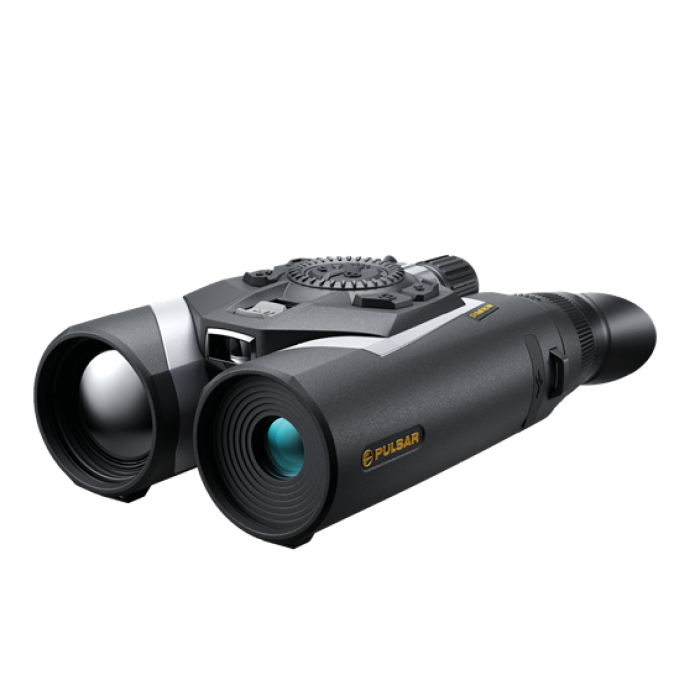
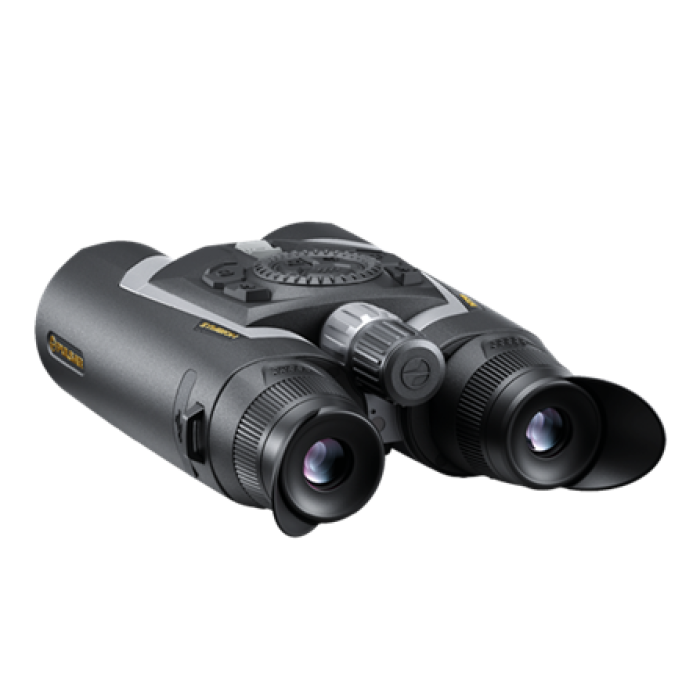
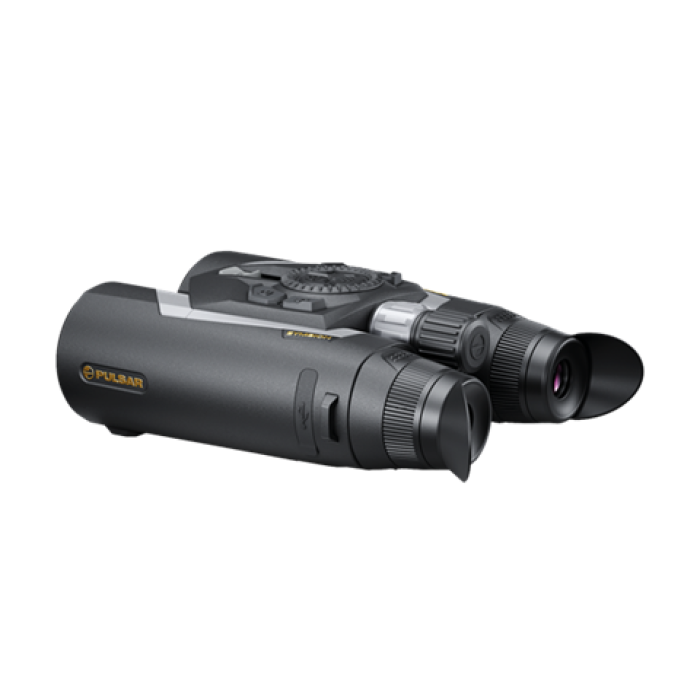
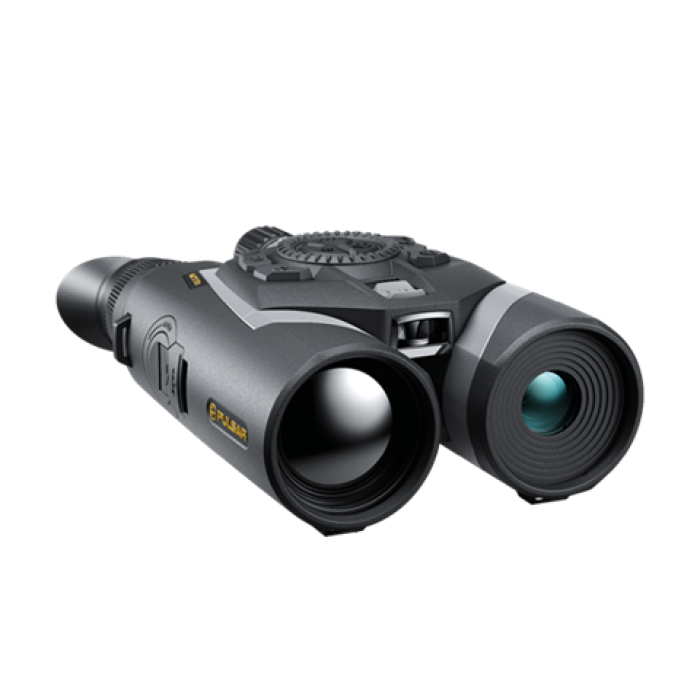
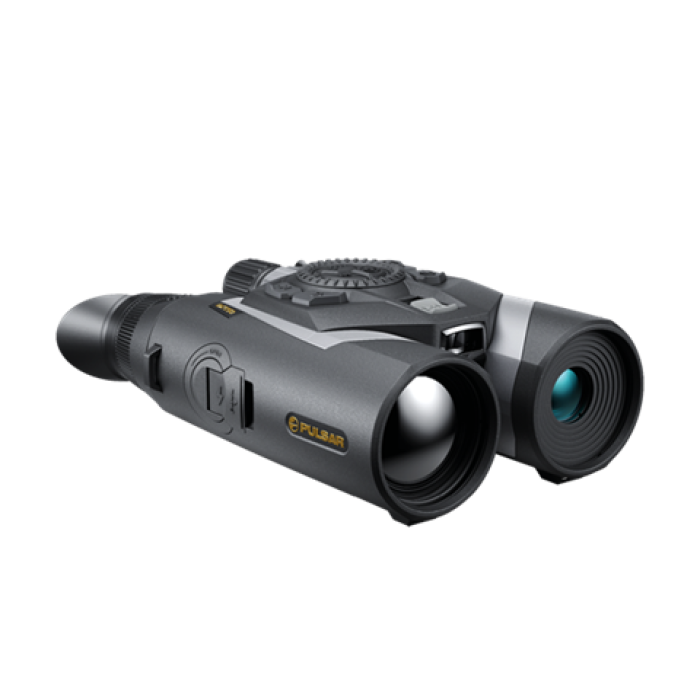
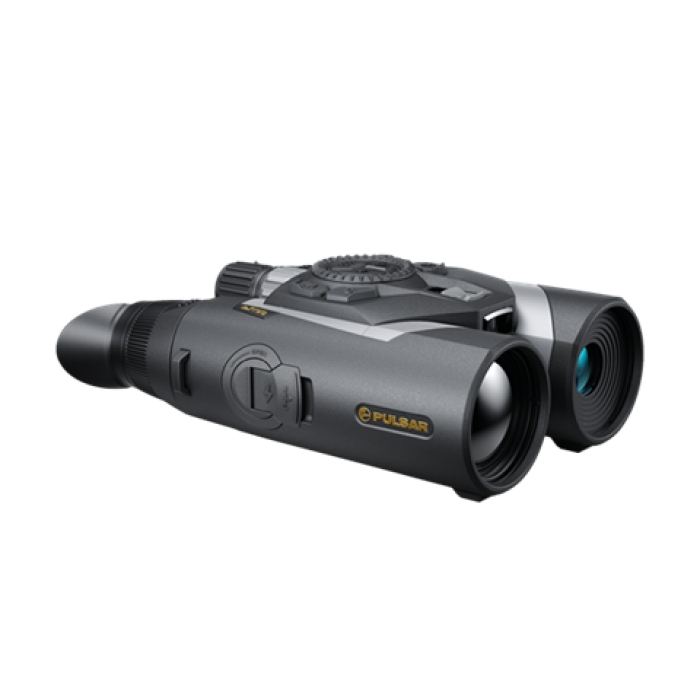
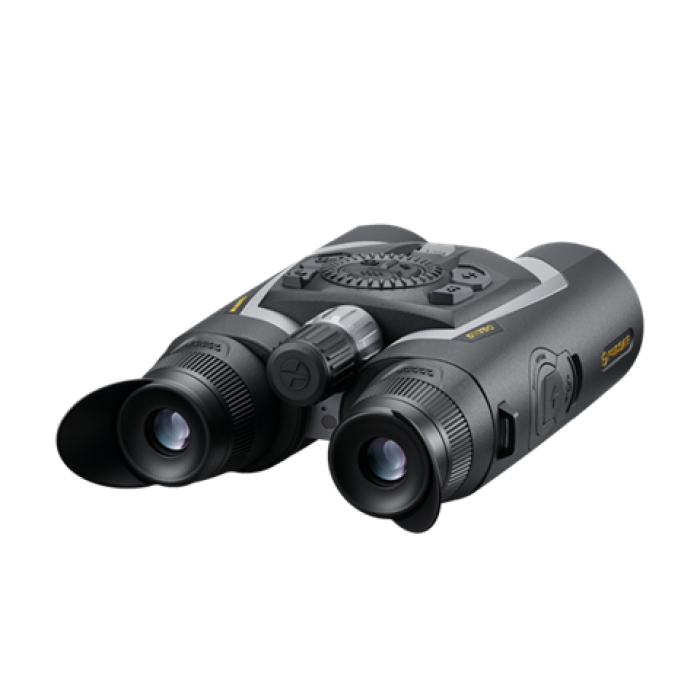
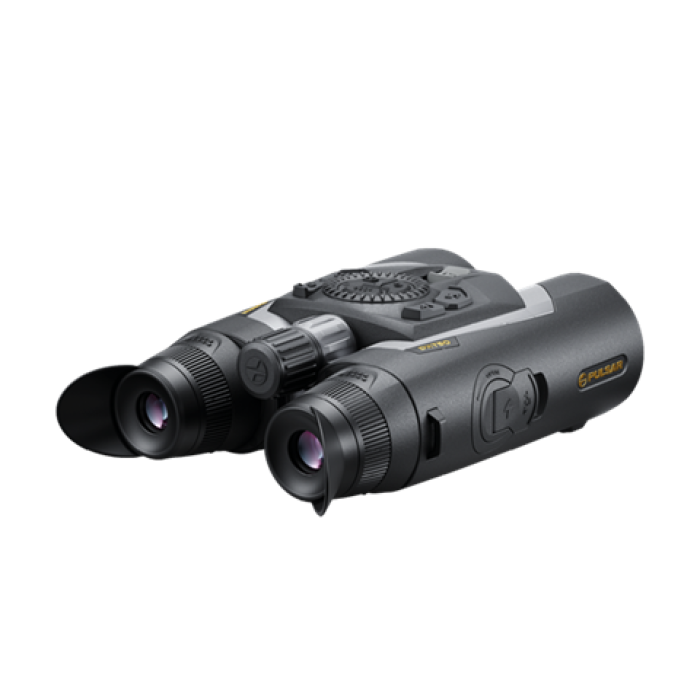
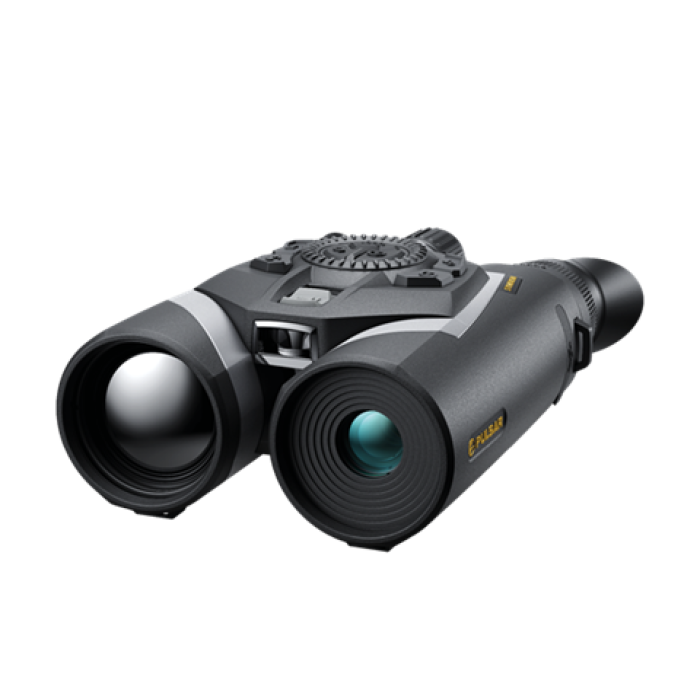
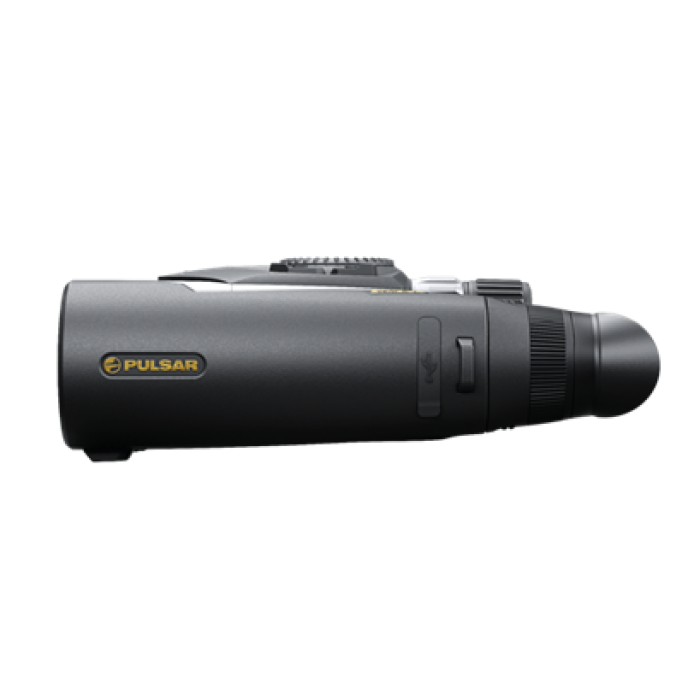
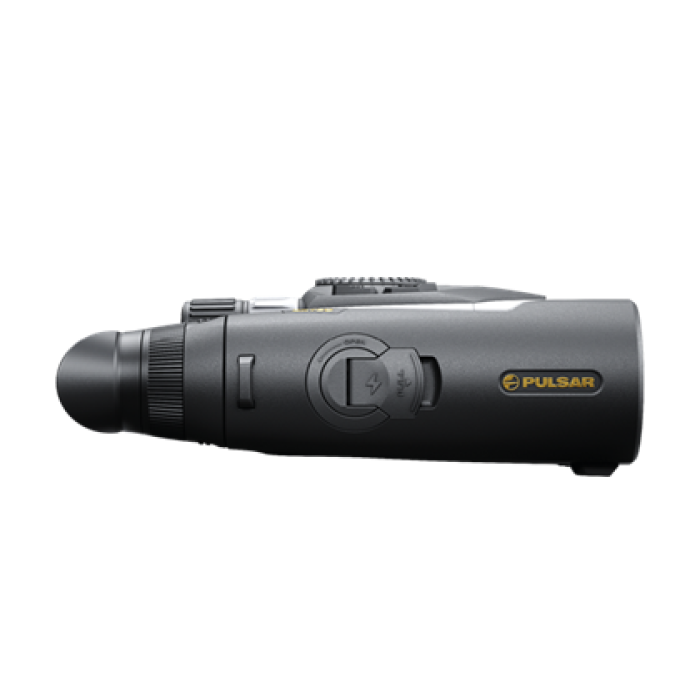
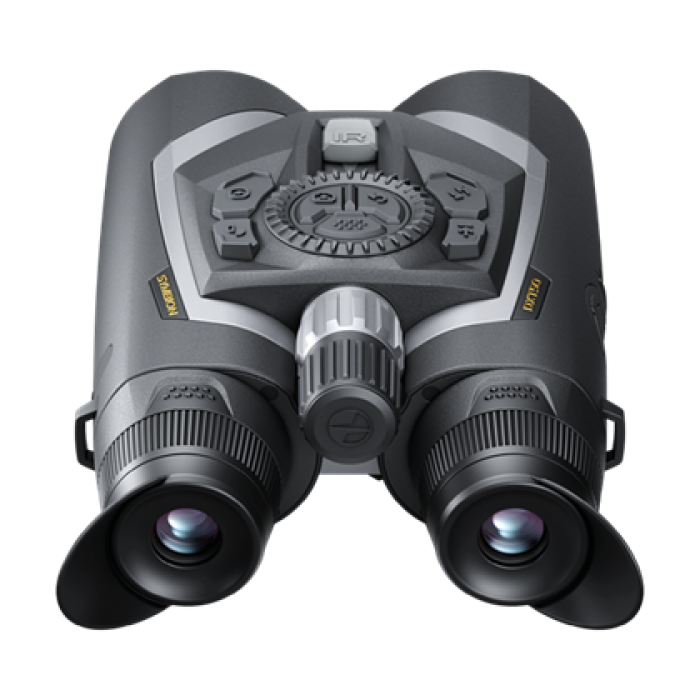
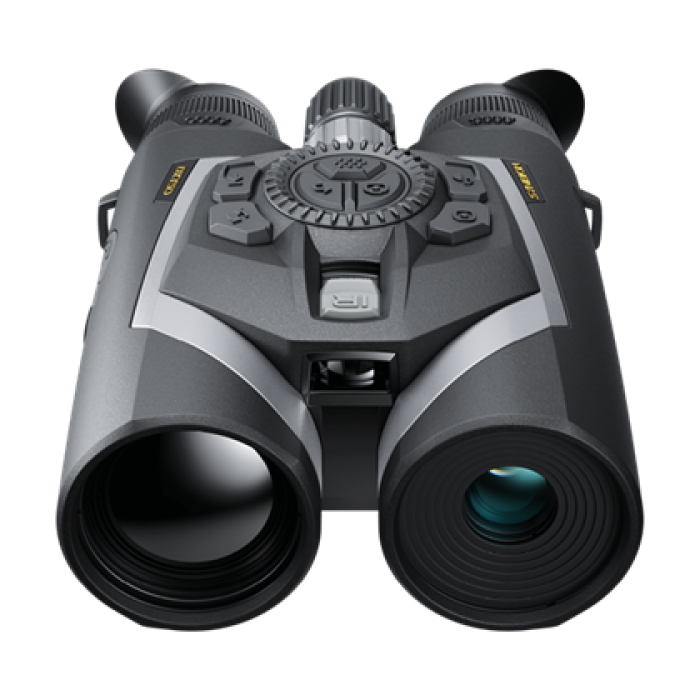


Pulsar Symbion LRF DXT50 Multispectral Binoculars with Thermal Imaging, 4K Day/Night Vision and LRF
The Pulsar Symbion LRF DXT50 is a professional multispectral binocular system built for round-the-clock observation. It combines a 1280 × 1024 thermal imaging channel, a 4K digital sensor, a focusable 850 nm IR illuminator and a laser rangefinder with a measuring range of up to 1,500 metres. From one handheld device, the operator can detect a heat signature, verify visual details by day or night, measure the distance and record the observation.
The DXT50 is optimised for rapid scanning in forests, along field edges and across mixed terrain. Its wide 17.5° thermal field of view, high-definition thermal sensor and combined digital/thermal viewing modes support fast detection, confirmation and tracking in daylight, twilight and complete darkness.
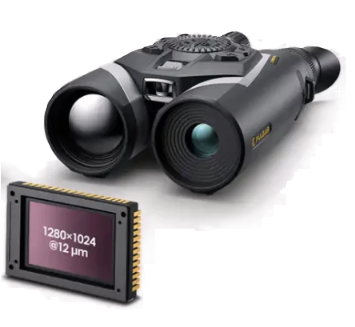
1280 × 1024 thermal channel
The thermal imaging module uses an uncooled 1280 × 1024-pixel microbolometer with a 12 µm pixel pitch and a 50 Hz refresh rate. The high native resolution preserves fine temperature detail and defined object contours, while the 50 Hz frame rate keeps movement fluid during panning or when tracking animals and other moving subjects.
Sensor sensitivity is rated at NETD <35 mK, while system sensitivity is specified at sNETD <20 mK. These values help the unit distinguish small temperature differences in high humidity, fog, precipitation and other low-contrast conditions. Three sensitivity amplification levels—Normal, High and Ultra—are available together with a smoothing filter and nine thermal colour palettes.
The F50/1.0 germanium objective provides 2× base magnification and a wide 17.5° field of view, equal to 30.7 m at 100 m. Its 2–24× magnification range allows the user to scan a large area first and then examine a detected subject more closely. The stated detection range for a deer-sized object is up to 2,300 m; practical recognition and identification distances depend on target size, weather, terrain and operator experience.
4K digital channel
The 3840 × 2160-pixel 4K CMOS sensor produces a detailed full-colour image during daylight and supports observation at twilight and at night. Its F50/1.8 objective, 6.5–26× magnification range and 5.8° field of view, corresponding to 10.2 m at 100 m, make the digital channel useful for confirming visible details after initial thermal detection.
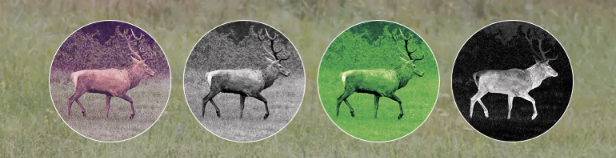
Four digital imaging modes are available: Day Color for full-colour daylight observation, Twilight for fading light, and Night B&W or Night Green for night-time viewing. In complete darkness, the digital channel is supported by a built-in, focusable 850 nm LED infrared illuminator with three power levels.
The focusable illuminator lets the user direct the infrared beam onto the required part of the scene and select an output level suitable for the viewing distance. Active infrared illumination can be detected by compatible night-vision equipment, and extended use at maximum power reduces battery runtime.
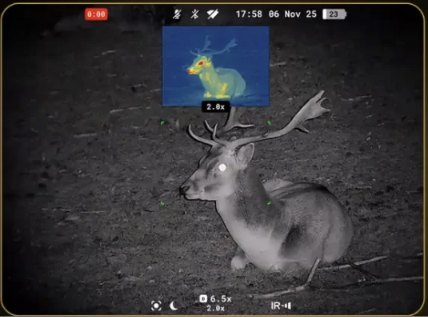
Combined thermal and digital view
DUO mode displays the thermal and digital channels simultaneously in a picture-in-picture layout. The thermal channel can be used to locate heat signatures quickly, while the digital channel helps confirm visible details and assess the surroundings. The main and secondary channels can be exchanged according to the observation task.
The standard PiP function displays a magnified section of the scene in a separate window while retaining a wider overview in the main image. Electronic image stabilisation reduces visible hand movement and improves image usability at high magnification, when following moving subjects and while recording video.
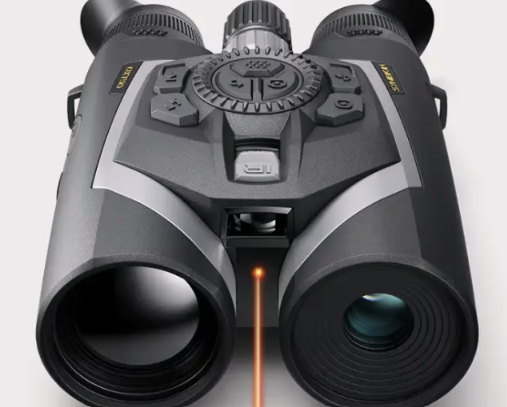
1,500 m laser rangefinder
The integrated laser rangefinder measures distances up to 1,500 m with stated accuracy of ±1 m. Its 905 nm emitter is classified as Class 1 under IEC 60825-1:2014. Users can select a single measurement or continuous SCAN mode for tracking a moving subject or checking several reference points in succession.
The THD function shows true horizontal distance after accounting for the target angle, which is valuable on slopes and broken terrain. Actual measuring range varies with target size, shape, colour and reflectivity, as well as weather, beam angle and the position of the sun.
The Symbion LRF DXT50 supports Stream Vision Ballistics and includes a ballistic calculation function. It can display calculated corrections for the selected profile, but the DXT50 remains a handheld observation device and is not designed to be mounted on a firearm.
Technical specifications Pulsar Symbion LRF DXT50
Specification | Value |
Model | Pulsar Symbion LRF DXT50 |
Manufacturer SKU | 77456 |
Device type | Multispectral observation binoculars |
Thermal sensor | Uncooled microbolometer, 1280 × 1024 pixels |
Pixel pitch | 12 µm |
Sensor NETD | <35 mK |
System sNETD | <20 mK |
Frame rate | 50 Hz |
Thermal objective lens | F50/1.0 |
Thermal magnification | 2–24× |
Thermal field of view | 17.5° / 30.7 m at 100 m |
Thermal detection range | Up to 2,300 m |
Digital sensor | 4K CMOS, 3840 × 2160 pixels |
Digital objective lens | F50/1.8 |
Digital magnification | 6.5–26× |
Digital field of view | 5.8° / 10.2 m at 100 m |
Minimum focusing distance | 3 m |
IR illuminator | Focusable 850 nm LED, 3 power levels |
Displays | MicroLED (AMOLED), 1920 × 1080 pixels |
Dioptre adjustment | −5 to +5 D |
Interpupillary distance | 62.5–74 mm |
Eye relief | 13 mm |
Laser rangefinder | Up to 1,500 m |
Measurement accuracy | ±1 m |
Rangefinder wavelength | 905 nm |
Laser safety class | Class 1 under IEC 60825-1:2014 |
Photo and video resolution | 1440 × 1080 pixels |
File formats | JPG / MP4 |
Audio recording | Yes |
Built-in memory | 64 GB |
Wi-Fi | 2.4/5 GHz, IEEE 802.11 b/g/n/ac |
Bluetooth | BLE 4.2 |
Supported applications | Stream Vision 2, Stream Vision Ballistics |
Battery type | Two removable APS 5 batteries |
Battery capacity | 4,900 mAh per battery |
Operating time | Up to 8 hours with two APS 5 batteries at 22 °C |
External power | 5/9 V USB Type-C Power Delivery |
Body material | Magnesium alloy |
Environmental protection | IP67 |
Operating temperature | −25 to +50 °C |
Tripod connection | 1/4″ socket; adapter with ARCA-SWISS support |
Dimensions | 207 × 132 × 72 mm |
Weight | 1 kg including battery |
The specifications above follow the current official Pulsar product listing for the Symbion LRF DXT50. Additional interface and operating details have been checked against the manufacturer’s user manual.
Magnesium body and controls
The magnesium-alloy housing provides a rigid structure while keeping the total weight to 1 kg including the battery. Its IP67 protection rating is intended for use in rain, snow and dusty environments and protects the unit during temporary immersion in water. The current product specification lists an operating temperature range of −25 to +50 °C.
The classic binocular layout reduces eye strain during extended observation. Interpupillary distance can be adjusted from 62.5 to 74 mm, while the −5 to +5 D dioptre range permits separate adjustment for each eye. The main buttons, dual focusing wheels and three-position ON/Sleep/OFF switch support one-handed operation by both right- and left-handed users.
Haptic feedback confirms key commands without forcing the user to look away from the scene. A proximity sensor switches off the displays when the binoculars are moved away from the eyes, while Sleep mode temporarily disables the displays and selected functions to conserve power.
Power and runtime
The package includes two removable APS 5 lithium-ion batteries, each with a capacity of 4,900 mAh. Sequential use of both batteries provides up to 8 hours of operation at 22 °C. Actual runtime varies with ambient temperature, IR illuminator output, Wi-Fi and Bluetooth use, rangefinder activity, recording and the selected viewing mode.
Rapid battery replacement is practical during extended field work. The USB Type-C port supports 5/9 V external power and Power Delivery, allowing the binoculars to operate from a compatible power bank. Turning off wireless connections and the IR illuminator when they are not needed helps extend operating time.
Recording and connectivity
The built-in recorder captures 1440 × 1080-pixel photographs in JPG format and video in MP4 format, with audio recording supported. 64 GB of internal memory provides substantial storage without a separate memory card. USB-C video output is also supported.
Dual-band 2.4/5 GHz Wi-Fi connects the binoculars to Stream Vision 2. The application supports image streaming to a smartphone, remote control of available functions, file transfer and firmware updates. Bluetooth BLE 4.2 provides connectivity with Stream Vision Ballistics.
Field applications
Wildlife and nature observation. The wide thermal field of view is useful for scanning woodland rides, forest edges, fields and areas with tall vegetation. Once a heat signature is found, the 4K digital channel can be used to check visible characteristics of the subject.
Twilight and night observation. The thermal channel requires no external light source and can detect heated objects in complete darkness. The digital night channel and 850 nm IR illuminator are available when the operator needs to examine outlines, background features and other visual details.
Property surveillance and search operations. Combining thermal detection, digital imaging and distance measurement simplifies perimeter observation and the search for people or animals. Photo, video and audio recording help document relevant events.
Observation across uneven ground. SCAN mode and THD assist with range assessment on slopes. Electronic stabilisation improves image readability during handheld use, while the supplied ARCA-SWISS-compatible adapter allows the binoculars to be installed on a suitable tripod.
The use of thermal imaging equipment for hunting is subject to national and local regulations. Always check the current law and the rules applying to the specific hunting area before use.
Initial setup
- Fully charge both APS 5 batteries and insert one battery into the compartment.
- Open the objective covers and move the three-position switch to ON.
- Adjust the interpupillary distance until both images merge into one clear field without dark edges.
- Set each eyepiece dioptre using the interface symbols, then focus the selected thermal or digital objective on the observed subject.
- Select the required spectral channel or activate DUO mode for simultaneous thermal and digital viewing.
- For the thermal channel, select the sensitivity level, colour palette and suitable calibration mode.
- In digital night mode, activate the IR illuminator, select the lowest effective output and focus the beam on the required area.
- Press the LRF control briefly for a single measurement, or hold it for more than two seconds to activate continuous SCAN mode.
- Connect the unit to Stream Vision 2 and check for available firmware updates.
The Pulsar Symbion LRF DXT50 does not require zeroing because it is a handheld observation device rather than a weapon sight. Before use, the operator only needs to adjust the eyepieces, focus, image settings and rangefinder and, where required, configure a ballistic profile.
Cleaning and storage
After field use, remove moisture and dirt from the housing with a soft, dry cloth. Clear loose sand and dust from the objectives, eyepieces, IR illuminator window and rangefinder window with an air blower or soft optical brush before wiping them. This reduces the risk of scratching the protective coatings. Use a clean microfibre cloth and a cleaning solution intended for optical surfaces for final cleaning.
Do not use solvents or aggressive household cleaners. Before each trip, inspect the optical surfaces, protective windows, controls, USB-C port and battery contacts. For long-term storage, remove the APS 5 battery, maintain approximately 50–80% charge and keep the binoculars in their case in a dry, ventilated location. The manufacturer recommends charging the batteries at temperatures between 0 and +35 °C.
Package contents
- Pulsar Symbion LRF DXT50 multispectral binoculars
- Two APS 5 batteries
- Two APS 5 battery covers
- APS 5 battery charger
- Mains power adapter
- USB Type-C cable with USB Type-A adapter
- Tripod adapter with ARCA-SWISS support
- Binocular carrying harness
- Neck strap
- Protective carrying case
- Optics cleaning cloth
- Quick-start guide
- Warranty card
Why choose the DXT50
The Pulsar Symbion LRF DXT50 combines the functions of several separate devices: thermal binoculars, a digital day and night observation unit, an IR illuminator, a laser rangefinder and a recorder. Its practical value is not simply the number of features, but the ability to use them in sequence on the same scene—detect a subject from its heat signature, confirm it through the digital channel, measure the distance and save a recording.
The 1280 × 1024 thermal sensor, wide field of view, 4K digital channel, DUO mode, image stabilisation, IP67-rated magnesium body and removable APS 5 power system make the DXT50 suitable for demanding 24/7 observation. It is a strong option for experienced users who value detailed imaging, rapid terrain scanning and fewer separate devices in their field kit.
Buy from Professional Optics
The Pulsar Symbion LRF DXT50 is available from Professional Optics in Split, Croatia. Customers benefit from competitive pricing, specialist product support and delivery throughout Croatia and across Europe.
Before ordering, customers can confirm availability, warranty conditions, delivery options and tripod accessory compatibility. Professional Optics can also assist with setting up the thermal and digital channels, laser rangefinder, Stream Vision 2 and Stream Vision Ballistics.
Frequently asked questions
How is the DXT50 different from conventional thermal binoculars?
The DXT50 combines a 1280 × 1024 thermal sensor with a 4K digital sensor, night-time IR illumination and a laser rangefinder. In addition to finding heat signatures, it provides full-colour daytime viewing, digital night observation and distance measurement.pulsarvision+1
Can the thermal and digital channels be viewed together?
Yes. DUO mode displays both channels at the same time in a picture-in-picture format, and the user can choose which channel occupies the main window.pulsarvision+1
Does the DXT50 work in complete darkness?
Yes. The thermal channel works without illumination, while the digital night channel is supported by a built-in, focusable 850 nm IR illuminator with three output levels.pulsarvision+1
What is the rangefinder’s maximum range?
The stated maximum range is 1,500 m with accuracy of ±1 m. Actual performance depends on the weather and the size, colour and reflectivity of the measured object.pulsarvision+1
Does the device need to be zeroed?
No. The Pulsar Symbion LRF DXT50 is a handheld observation binocular and is not a weapon sight. Only the eyepieces, focus and relevant image settings need to be adjusted before use.
How long does it operate on battery power?
Pulsar specifies up to 8 hours of operation at 22 °C when the two supplied APS 5 batteries are used sequentially. Cold weather, IR illumination, Wi-Fi, recording and frequent rangefinder use reduce practical runtime.pulsarvision+1
Can the DXT50 be mounted on a tripod?
Yes. The housing includes a 1/4″ socket, and the supplied tripod adapter supports ARCA-SWISS mounting.