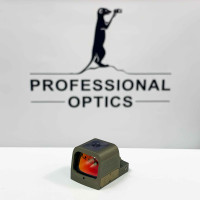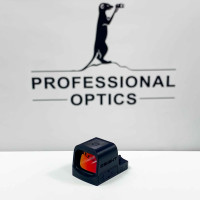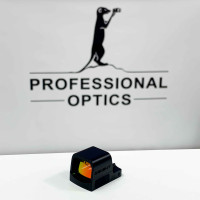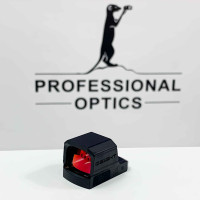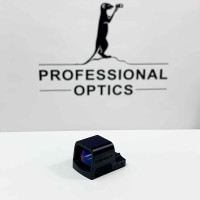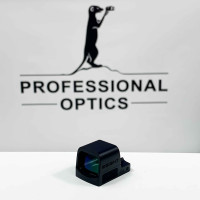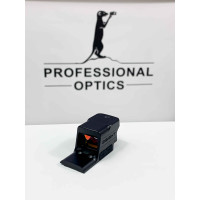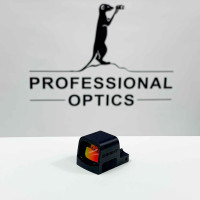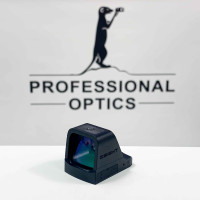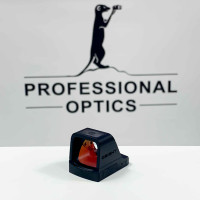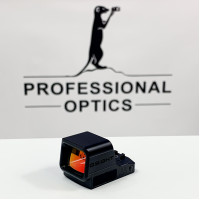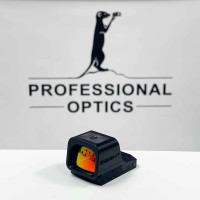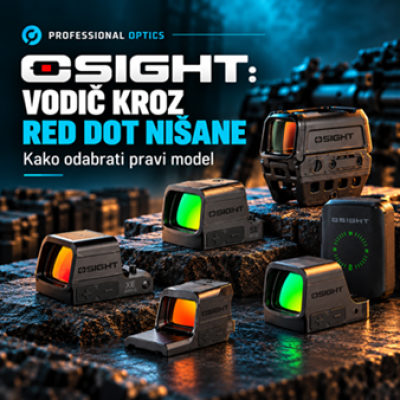
Osight (Olight): What You Need to Know About Osight Red Dot Sights and How to Choose the Right Model
The red dot sight market offers a wide selection of models from manufacturers such as Holosun, Aimpoint, Trijicon, Vortex, and others. Against this competitive backdrop, Osight, the red dot optics brand from Olight, stands out for its approach to design, power management, and reticle configuration.
One of Osight’s most recognizable features is the Magnetic Charging Cover, a magnetic charging cover that allows compatible red dot sights to be charged without removing them from their mounting position. However, the brand’s product range extends well beyond this technology. It includes open and enclosed emitter models, sights with replaceable batteries, different reticle configurations, and the popular RMR and RMSc mounting footprints.
In 2026, the product range expanded beyond compact pistol optics with the introduction of the Osight R, a model designed for long-gun platforms.
In this guide, we explore the differences between Osight red dot sights, the technologies used by the manufacturer, the key factors to consider when choosing a model, and how Osight compares with alternatives from other brands.
What Is Osight and How Is It Connected to Olight?
Osight is a red dot optics brand developed by Olight, a company best known for its handheld flashlights, weapon-mounted lights, and other compact electronic devices.
Entering the red dot sight market marked a new direction for Olight. Rather than focusing exclusively on conventional designs with traditional power systems, the company emphasized convenient charging, modern electronics, and a variety of reticle configurations.
The first Osight models attracted attention with the Magnetic Charging Cover system. The product range later expanded to include models with replaceable batteries, enclosed emitter designs, and the ability to switch between multiple reticle configurations.
Today, Osight is best understood as a dedicated family of red dot sights, with different models designed to meet different requirements for size, construction, power supply, and optical window dimensions.
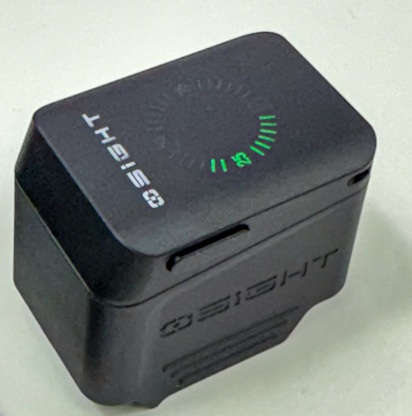 Magnetic Charging Cover: A Key Feature of Rechargeable Osight Models
Magnetic Charging Cover is one of the brand’s most recognizable technologies. It is a protective cover with a built-in battery that charges a compatible red dot sight through a magnetic connection.
The cover serves two purposes: it protects the optical window during storage and transport, and it provides an additional power source. An indicator allows users to check the charge level of the sight and the charging cover itself.
The main practical advantage is that compatible sights can be charged without removing them from their mounting position. This avoids unnecessary handling of the mounting system.
However, it is important to note that Magnetic Charging Cover is a feature of specific rechargeable models, not the entire Osight range. Compatibility, charging methods, and the stated number of additional charging cycles should be verified for each individual model.
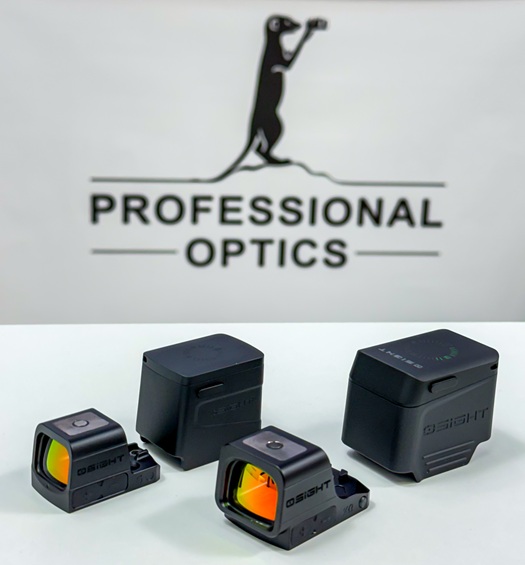
Rechargeable Battery or Replaceable Battery: Which Power System Should You Choose?
The Osight range offers two main approaches to power management.
Built-in rechargeable battery. This option suits users who prefer to recharge their sight regularly. Compatible models offer additional convenience through the Magnetic Charging Cover.
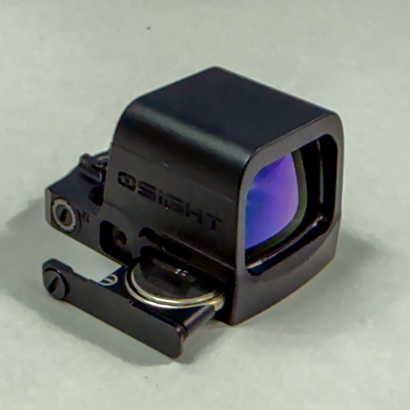 Replaceable battery. This option allows users to replace a depleted battery with a fresh one without waiting for a charging cycle to finish. On models with a side-loading battery compartment, replacement does not require removing the sight from its mount.
For example, the Osight C uses a CR1632 battery, while the compact Osight K and Osight SE use CR1620 batteries. The exact battery type should always be confirmed in the specifications of the individual model.
Neither power system is universally better than the other. Rechargeable designs are convenient for regular charging, while replaceable batteries may be more practical for users who prefer quick battery changes.
Open vs. Enclosed Osight Red Dot Sights: What Is the Difference?
The emitter design is one of the key factors to consider when choosing a red dot sight. It affects emitter protection, overall dimensions, and how the sight performs in different environments.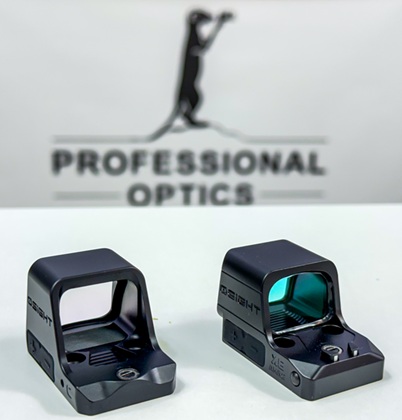
Open Emitter Red Dot Sights
In an open emitter design, the LED emitter is not enclosed within a sealed housing between the front and rear optical surfaces. This construction allows manufacturers to create compact sights with relatively large viewing windows.
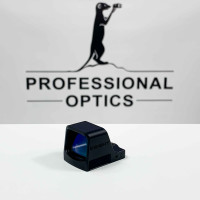
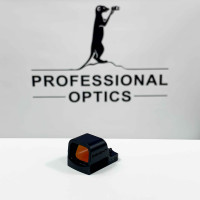
Open emitter models in the Osight range include the Osight K, Osight C, and Osight X.
An open design can be appealing for sport shooting and training, where a clear field of view, compact dimensions, and quick reticle acquisition are important. However, debris or contamination around the emitter may potentially interfere with the reticle.
Enclosed Emitter Red Dot Sights
In an enclosed emitter design, the LED emitter sits inside the housing between the optical surfaces. This provides additional protection against rain, snow, dust, and other contaminants.
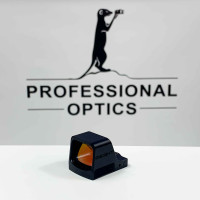
The enclosed models in the Osight range include the S, SE, XE, and XR.
An enclosed housing can be a practical choice for use in changing weather conditions. However, the external optical surfaces still require regular cleaning, and suitability for particular environments depends on the specifications of the individual model.
When choosing between open and enclosed emitter designs, consider the intended conditions of use, optical window dimensions, overall size, and personal preferences.
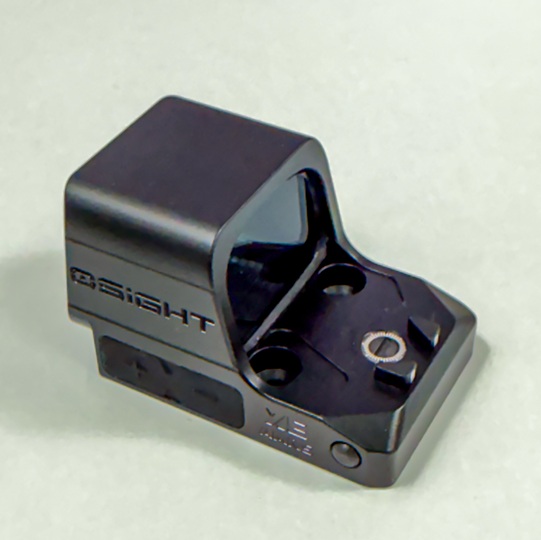 Osight Reticles: Dot, Circle-Dot, and the AMRS System
Different Osight models offer different reticle configurations, allowing users to choose an option that suits their preferences rather than being limited to a single red or green dot.
* Dot: A standalone central dot.
* Circle-Dot: A central dot combined with a surrounding circle.
* Circle: A circle without a central dot.
Depending on the model, the following configurations are available:
* Osight C and Osight X: 3 MOA dot and 32 MOA circle.
* Osight S and Osight SE: 2 MOA dot and 32 MOA circle.
* Osight XE and Osight XR: AMRS with five reticle configurations: a 2 MOA dot, a 6 MOA dot, a 32 MOA circle, and two combined dot-and-circle options.
AMRS stands for Advanced Multi-Reticle System. It allows users to switch between the available reticle configurations according to their preferences.
What Do 2 MOA, 3 MOA, and 6 MOA Mean?
MOA, or Minute of Angle, is an angular measurement used to describe the apparent size of a reticle. At the same distance, a smaller dot covers less of the target, while a larger dot may be easier to see.
A 2 MOA dot may be preferable for users who favor a smaller aiming point. A 6 MOA dot is visually larger and may be easier to acquire at close range. A Circle-Dot configuration combines a central dot with an additional circular reference.
The size of the dot should not be confused with the size of the optical window. These are two separate characteristics and should be evaluated independently.
RMR and RMSc Footprints: Check Compatibility Before Buying
A footprint is the mounting interface standard of a red dot sight. It defines the geometry of the contact surface, including the positions of mounting screws and locating features.
The Osight pistol sight range uses two common mounting standards:
* RMR: Used by the Osight C, X, XE, and XR.
* RMSc: Used by the compact Osight K, S, and SE.
However, an RMR or RMSc designation does not guarantee compatibility with every pistol, even if it is marked Optics Ready. An adapter plate and compatible mounting screws may be required.
Before ordering, verify the mounting standard of your specific pistol or installed adapter plate, the permitted screw length, and the manufacturer’s mounting instructions.
If you are comparing different types of aiming optics, explore our red dot sight category to review the available options.
Comparing the Main Osight Models
Model | Design | Mounting footprint | Reticle | Power source |
Open emitter | RMSc | 6 MOA dot | CR1620 battery | |
Open emitter | RMR | 3 MOA dot, 32 MOA circle, or both | CR1632 battery | |
Open emitter | RMR | 3 MOA dot, 32 MOA circle, or both | Built-in rechargeable battery with magnetic charging | |
Enclosed emitter | RMSc | 2 MOA dot, 32 MOA circle, or both | Built-in rechargeable battery with magnetic charging | |
Osight SE (RMSc, MRS) | Enclosed emitter | RMSc | 2 MOA dot, 32 MOA circle, or both | CR1620 battery |
Enclosed emitter | RMR | 2 or 6 MOA dot, 32 MOA circle, or combined configurations | CR1632 battery | |
Enclosed emitter | RMR | 2 or 6 MOA dot, 32 MOA circle, or combined configurations | Built-in rechargeable battery with magnetic charging | |
Enclosed emitter | Micro T1/T2 | 2 MOA dot, 65 MOA circle, or both | CR2032 battery |
The table summarizes the main differences between the models based on the available specifications. Before publication, individual model specifications and package contents should be verified against the manufacturer’s current documentation.
The comparison also reveals the logic behind the product range. For example, the Osight C and Osight X share an open emitter design and similar reticle configurations but differ in their power systems. The Osight S and Osight SE are compact enclosed emitter sights, but one uses a rechargeable system while the other relies on a replaceable battery.
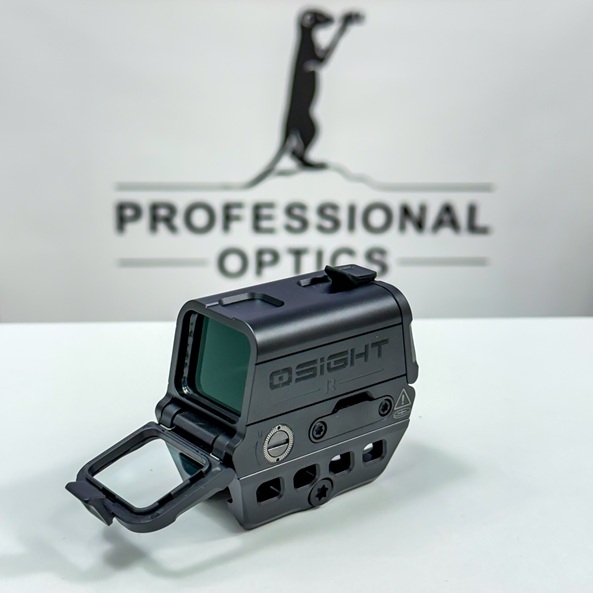 Osight R: A Dedicated Option for Long-Gun Platforms
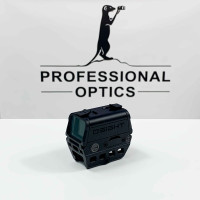
The Osight R expands the brand’s range beyond compact pistol red dot sights. It is an enclosed 1× red dot sight featuring a 7075-T6 aluminum housing and a reticle system that combines a 2 MOA dot with a 65 MOA circle.
Depending on the selected configuration, users can choose Dot, Circle, or Circle-Dot. The sight is powered by a replaceable CR2032 battery, and its mounting interface is compatible with the Micro T1/T2 footprint. A suitable mount is provided for installation on a Picatinny rail.
It is important not to confuse the Micro T1/T2 mounting standard with the RMR and RMSc standards used by pistol optics. These are different mounting systems, and compatibility must be checked against the specific mount.
The Osight R is a dedicated option for long-gun platforms, including carbines and rifles, rather than simply a larger version of a pistol sight.
Osight vs. Holosun, Aimpoint, Trijicon, and Vortex
Comparing entire brands based only on the number of features is not particularly useful. Different manufacturers offer different product ranges, designs, and price segments.
Holosun has an extensive red dot sight lineup, including open and enclosed emitter models, multiple reticle systems, and different power management solutions.
Aimpoint and Trijicon have long histories in the aiming optics industry. For buyers who place particular importance on the accumulated experience of long-term use of a specific platform, this may be an important consideration.
Vortex also offers a broad range of optical products across different price categories.
Osight stands out through its emphasis on modern features, varied designs, and the Magnetic Charging Cover system available with rechargeable models. At the same time, the brand has a shorter history specifically in the red dot sight market. Its record of long-term field use should therefore not be equated with that of more established manufacturers.
This does not mean that one brand is automatically better than another. A meaningful comparison should focus on individual models and consider emitter design, footprint, window size, reticle, power source, housing protection, warranty terms, and price.
How to Choose an Osight Red Dot Sight
The best starting point is compatibility and intended use, rather than price or the number of features.
- Check your platform and footprint. Identify the mounting standard and determine whether an adapter plate is required.
- Choose the emitter design. An open emitter model may appeal to users who prioritize compact dimensions and a clear viewing window. An enclosed design provides additional protection for the emitter against external contamination.
- Decide on the power system. If you prefer charging your sight, consider compatible rechargeable models. If quick battery replacement is your priority, look at versions with replaceable batteries.
- Select the reticle. Compare Dot, Circle-Dot, and the available dot sizes. A larger reticle is not necessarily better, and a smaller one is not always more convenient.
- Verify the specifications of the individual model. Pay attention to optical window dimensions, brightness settings, housing protection, warranty, and package contents.
To compare the available options, visit the Professional Optics optical products catalog.
Why Buy Optics from Professional Optics?
Choosing a red dot sight involves more than comparing technical specifications. Compatibility, package contents, warranty conditions, and access to product advice are also important considerations.
Professional Optics specializes in optical equipment for a variety of applications, offering products ranging from red dot sights and other aiming optics to binoculars, telescopes, microscopes, and thermal imaging devices.
Before ordering an Osight model, we recommend checking its specifications against the requirements of your platform. If you are unsure about the footprint, adapter plate, or power system, contact the Professional Optics team for assistance.
FAQ: Frequently Asked Questions About Osight Red Dot Sights
Are Osight and Olight the same brand?
Osight is a red dot optics brand developed by Olight, a company best known for its lighting products.
How do Osight red dot sights differ from other brands?
Key features include Magnetic Charging Cover on rechargeable models, a range of open and enclosed emitter designs, multiple reticle configurations, and models with replaceable batteries.
Do all Osight red dot sights use a magnetic charging cover?
No. Some models have a built-in rechargeable battery and a compatible charging cover, while others use replaceable CR1620, CR1632, or CR2032 batteries, depending on the model.
Which is better: an open or enclosed emitter red dot sight?
An open emitter sight may offer compact dimensions and a large viewing window. An enclosed design provides additional protection for the emitter against contamination. The right choice depends on the intended conditions of use and the specifications of the individual sight.
What is the difference between RMR and RMSc footprints?
They are different mounting interface standards. RMR is commonly used for full-size models, while RMSc is widely used for compact pistol optics. Compatibility should be checked against the specific platform and mounting plate.
What does AMRS mean on the Osight XE and XR?
AMRS stands for Advanced Multi-Reticle System. It allows users to choose between five reticle configurations, including 2 MOA and 6 MOA dots, a 32 MOA circle, and combined dot-and-circle options.
Which reticle is better: 2 MOA or 6 MOA?
A 2 MOA dot is smaller and covers less of the target. A 6 MOA dot is visually larger. The best option depends on personal preference and intended use.
Does Osight make a red dot sight for long-gun platforms?
Yes. The Osight R is an enclosed emitter sight featuring a 2 MOA dot, a 65 MOA circle, CR2032 battery power, and a Micro T1/T2-compatible mounting interface.
Can an Osight sight be installed on any pistol marked Optics Ready?
No. The Optics Ready designation alone does not guarantee compatibility. The mounting standard, adapter plate, mounting screws, and manufacturer’s recommendations must all be checked.
Is Osight better than Holosun?
There is no universal answer. Both brands offer different models with different features. A meaningful comparison should consider the specific sights, their construction, compatibility, power systems, reticles, warranty, and price.
Conclusion
Osight is Olight’s red dot optics brand, bringing together several design approaches: open and enclosed emitter sights, rechargeable and replaceable battery systems, and both simple and multi-configuration reticles.
The best way to choose the right model is to start with compatibility and then compare the design, power source, optical window, and available settings. This approach makes it possible to evaluate Osight based not just on its brand name or number of features, but on how well a particular sight meets your requirements.
Explore the optical equipment available from Professional Optics and check the specifications of your chosen model before purchasing.